Research Platform · AI Infrastructure · Active Development

Critical Mass

AI Infrastructure & Technology Markets Research Platform

Critical Mass is a research-driven analytical platform that organizes fragmented technology-market signals into structured research, data-supported analysis, and web-based outputs.

Business Analytics Technology Markets Structured Research Web Publishing
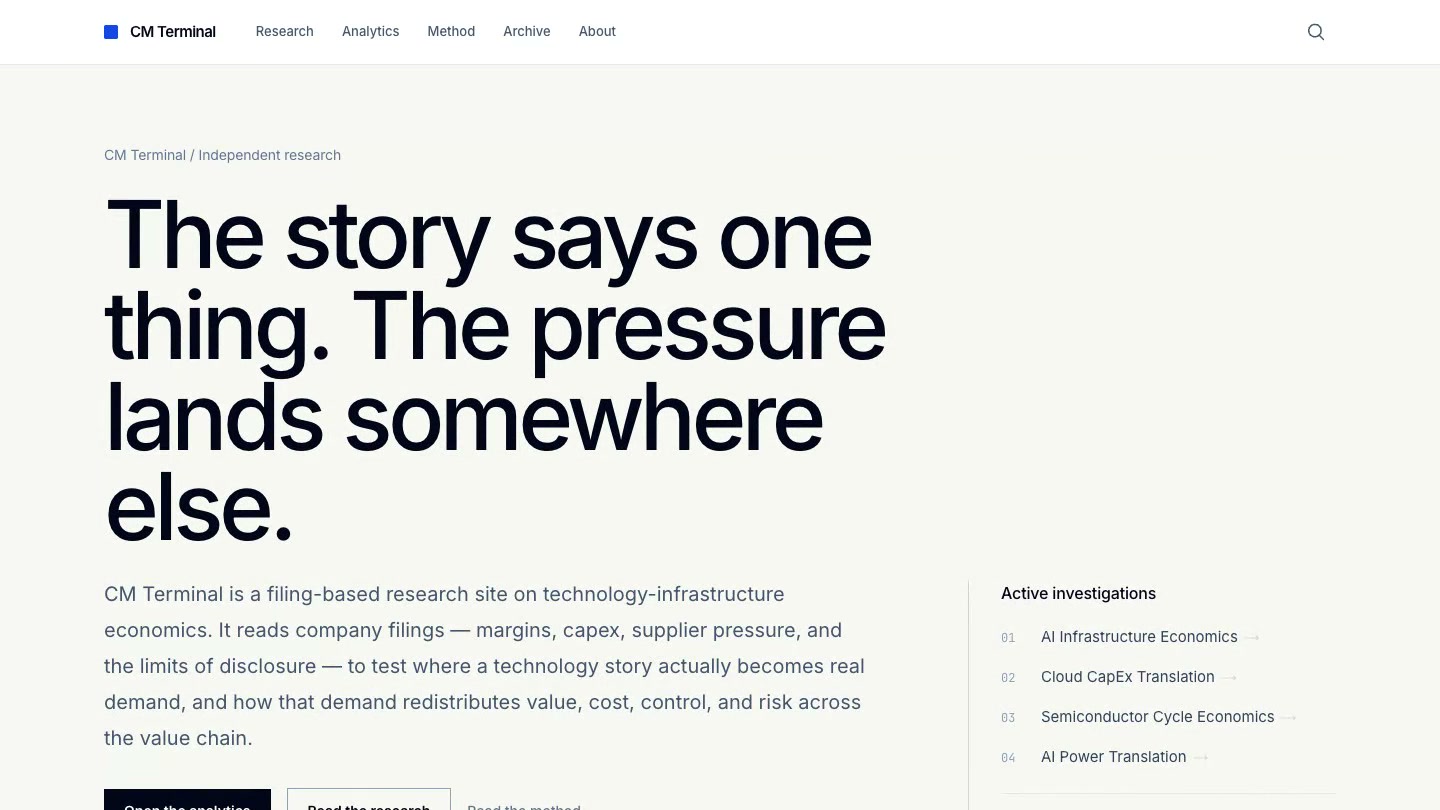
Live preview
cm-term.com

Research interface preview · Theme tracking · Structured outputs

CM Terminal platform preview poster
01

Platform overview

Independent Research Platform

AI Infrastructure / Semiconductors / Technology Markets

Structured Research / Data Organization / Web Publishing

Research Design / Web Build / Analytical Writing

Active Development · Public research site online

Research Pages / Theme Maps / Structured References

02

Why the project exists

Technology-market information is often fragmented across company disclosures, product launches, earnings calls, supply-chain updates, and infrastructure constraints. Critical Mass was built to organize these scattered signals into a research workflow that supports comparison, interpretation, and decision-oriented analysis.

03

From signal collection to readable output

Capture fragmented technology-market signals

Gather information from disclosures, launches, earnings calls, sector updates, and infrastructure developments.

Turn scattered inputs into comparable categories

Classify scattered inputs into reusable categories for comparison and follow-up research.

Interpret the business and market implications

Translate technical and industry developments into questions about market structure, positioning, and operating realities.

Present findings as web-based outputs

Publish research findings as readable web pages, indicators, and dashboard-style summaries.

04

Examples of the analytical outputs this platform is designed to produce

Infrastructure themes organized into trackable research views

AI compute, HBM, advanced packaging, optical networking, and data center power constraints.

Role-based views across the AI infrastructure stack

Organizing companies by their role in the AI infrastructure stack and related market exposure.

Expectation shifts translated into readable summaries

Tracking how market expectations shift around infrastructure bottlenecks, capex cycles, and execution risk.

05

How the platform interprets market signals

Understand where value is created across the technology stack, how ecosystems are organized, and how bargaining power is distributed.

Compare strategic role, product relevance, narrative positioning, and company exposure within specific technology themes.

Track the limits that shape execution, including supply chains, manufacturing bottlenecks, deployment capacity, and ecosystem dependencies.

Assess how markets are framing growth, risk, and competitive advantage, then compare that framing with underlying business realities.

06

Three-layer system design

Signal ingestion and organization

A structured layer for capturing source material, grouping signals by theme, and preparing information for later comparison and retrieval.

Analytical taxonomy and interpretation

A research framework that connects company updates, infrastructure developments, and sector shifts to business and market implications.

Readable web-based outputs

A publishing interface for research pages, indicators, and dashboards designed to make structured analysis easier to navigate and communicate.

07

What I worked on directly

  • Designed the research structure and analytical taxonomy.
  • Built the web-based publishing interface.
  • Organized technology-sector signals into comparable categories.
  • Developed research outputs focused on AI infrastructure and semiconductor themes.
  • Connected technical industry changes with business and market implications.
08

Capabilities shown through the project

Structured research design

Build a consistent way to capture, classify, and revisit technology-market information.

Market and industry analysis

Interpret company developments through industry structure, competitive role, and market context.

Data organization and visualization

Turn fragmented observations into indicators, categories, and readable web-facing views.

Technology-sector interpretation

Connect AI infrastructure and semiconductor developments to business and market implications.

Web-based analytical communication

Present research in a format that supports clarity, comparison, and professional communication.

Explore the live research platform

The live platform is used to publish ongoing research notes, track technology-market themes, and present structured analysis in a readable web format.